Mortgage AI Tools

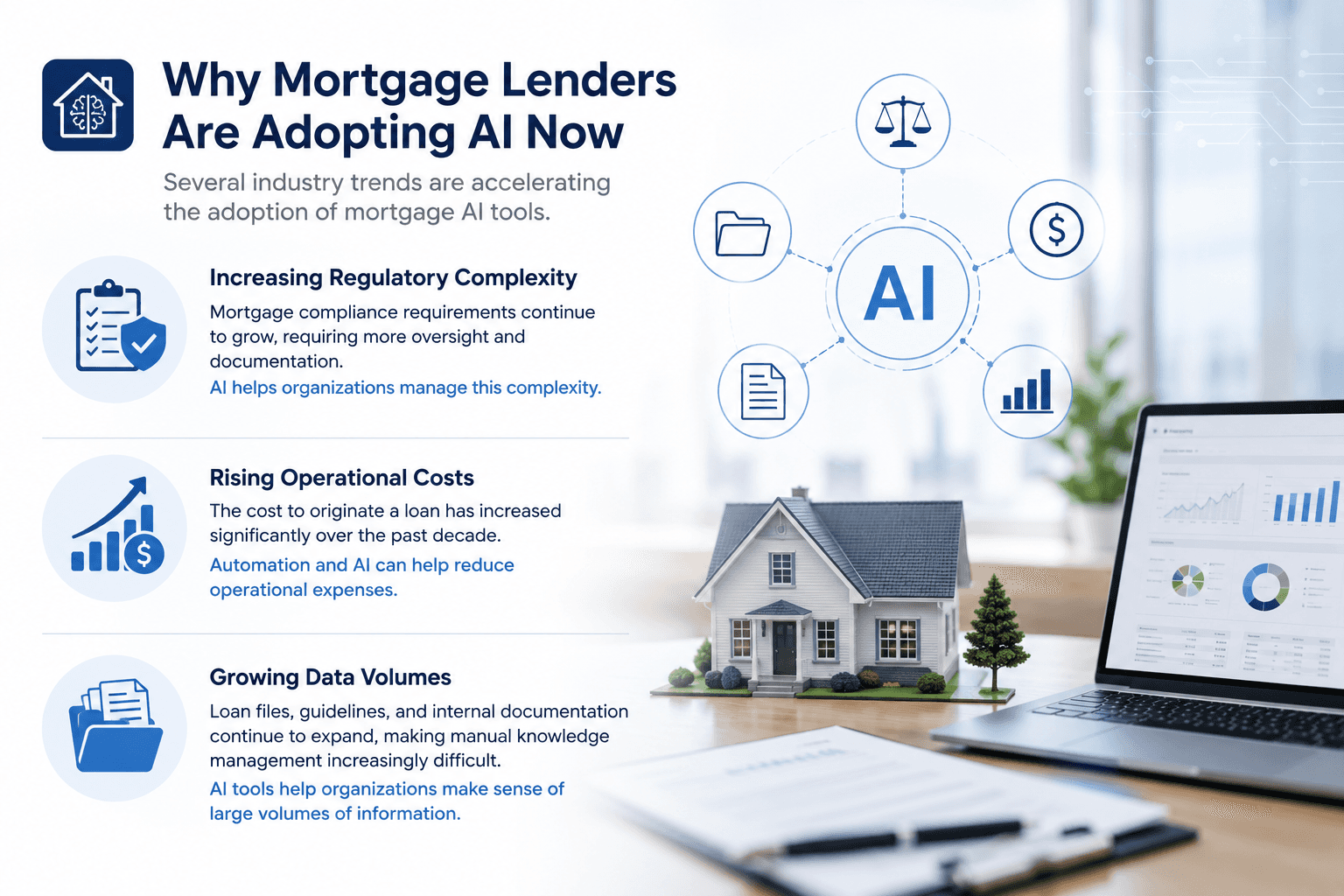
The mortgage industry has always been data-intensive. Loan files contain hundreds of pages of documentation, guidelines change frequently, and compliance requirements continue to grow.
For decades, lenders have relied on manual processes to review files, interpret investor guidelines, answer internal questions, and ensure regulatory compliance. These tasks require significant time from underwriters, processors, compliance teams, and quality control professionals.
Today, mortgage AI tools are changing how lenders operate.
Artificial intelligence is now being used to analyze documents, answer complex guideline questions, automate repetitive workflows, and help teams make faster, more informed decisions.
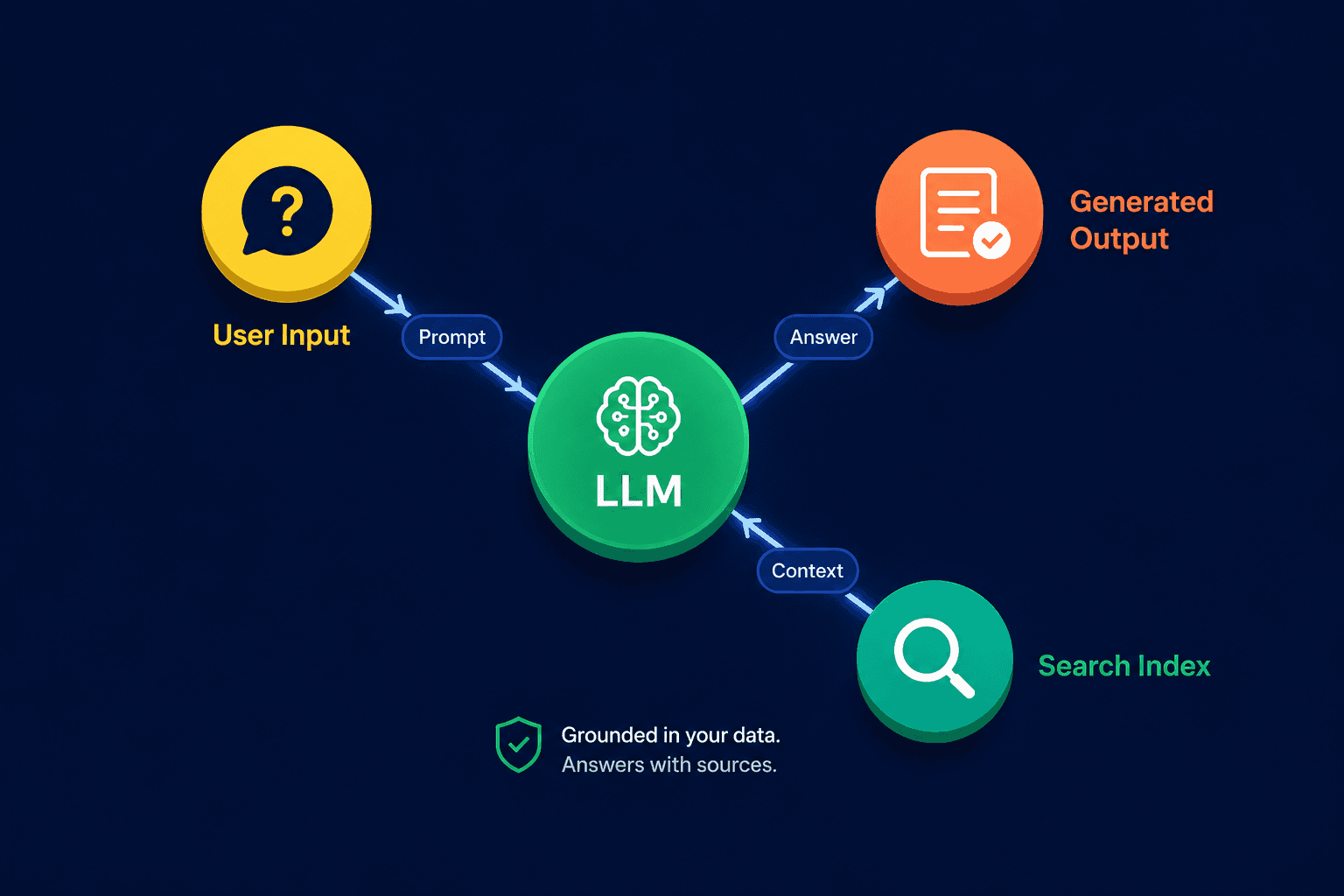
Instead of searching through PDFs, investor matrices, or internal documentation, teams can now interact directly with AI systems that retrieve answers instantly.
One platform leading this transformation is AskBobAI.
What Are Mortgage AI Tools?
Mortgage AI tools are software systems that use artificial intelligence to assist mortgage professionals with tasks such as:
Document extraction
Guideline interpretation
Quality control checks
Compliance monitoring
Internal knowledge search
Workflow automation
Customer support
These tools help lenders process loans more efficiently while reducing human error and improving regulatory compliance.
Instead of replacing mortgage professionals, AI tools augment their expertise, allowing teams to focus on higher-value decisions rather than repetitive manual tasks.
Key Areas Where AI Is Transforming Mortgage Operations
1. Document Processing and Data Extraction
Mortgage loan files include large volumes of documents such as:
Income documentation
Bank statements
Tax returns
Appraisal reports
Disclosures
Title documents
Traditionally, reviewing these documents requires manual verification.
Mortgage AI tools can automatically:
Extract structured data from documents
Identify missing documentation
Validate key fields
Flag inconsistencies across files
This significantly reduces the time required to review loan files while improving accuracy.
2. Mortgage Guideline Intelligence
Mortgage guidelines from investors, agencies, and lenders are complex and constantly evolving.
Teams often spend significant time searching through:
Product matrices
Underwriting guidelines
Investor bulletins
Policy documents
AI tools can index these documents and allow users to ask questions such as:
What is the minimum credit score for a DSCR loan?
Can gift funds be used on this product?
What documentation is required for self-employed borrowers?
Instead of manually searching through documents, AI provides instant answers with supporting sources.
This capability dramatically improves productivity for:
Underwriters
Loan officers
Processors
Compliance teams
3. Mortgage Quality Control (QC)
Quality control is critical in mortgage lending. Lenders must ensure that every loan file complies with internal policies, investor guidelines, and regulatory requirements.
Traditional QC is typically reactive:
The loan closes
A post-close audit occurs
Issues are discovered
Remediation is required
Mortgage AI tools allow lenders to move toward proactive quality control.
AI systems can monitor loan files during the origination process and identify issues such as:
Missing documents
Incorrect disclosures
Guideline violations
Inconsistent data across forms
By identifying problems earlier in the process, lenders can fix issues before the loan closes, reducing risk and improving investor confidence.
4. Internal Knowledge Search
Mortgage organizations contain large volumes of internal knowledge, including:
Underwriting policies
Operations procedures
Compliance manuals
Investor guidelines
Training materials
Employees often struggle to locate the right answer quickly.
Mortgage AI assistants allow employees to ask natural language questions and receive immediate answers from internal documentation.
This dramatically improves productivity across departments.
5. Customer Support and Operations
AI tools can also support borrower-facing and operational workflows by helping teams respond to questions more quickly.
For example, AI systems can assist support teams with:
loan process questions
documentation requirements
guideline clarification
internal procedures
Instead of waiting for escalations or manual research, teams receive answers instantly.
The Benefits of Mortgage AI Tools
Organizations across the mortgage industry are beginning to see measurable operational improvements after implementing AI-powered tools. These improvements go far beyond simple automation—they impact productivity, risk management, decision-making, and the overall accessibility of institutional knowledge.
As lending operations grow more complex and regulatory requirements continue to expand, AI is quickly becoming a competitive advantage for lenders that want to operate efficiently and scale without increasing headcount.
Increased Productivity
Mortgage operations teams spend a surprising amount of time searching for information. Employees often have to dig through shared drives, policy documents, investor guidelines, underwriting manuals, email threads, and internal knowledge bases just to answer a single question.
AI dramatically reduces the time required to locate this information.
Instead of manually searching through documents or asking multiple team members for help, employees can ask a simple question and receive an instant answer based on the company’s internal knowledge. This allows underwriters, processors, QC analysts, and operations staff to resolve questions in seconds rather than minutes or hours.
The result is a more efficient workforce where employees spend less time on manual research and more time on high-value activities such as underwriting decisions, borrower support, and loan pipeline management.
For organizations processing thousands of loans per year, these small time savings compound into significant productivity gains.
Reduced Risk
Mortgage lending is one of the most highly regulated industries in financial services. Every loan file must comply with a wide range of requirements—from investor guidelines and underwriting policies to federal and state regulations.
When errors occur, they can lead to serious consequences such as loan repurchase demands, compliance violations, or failed audits.
AI tools help reduce these risks by identifying potential issues earlier in the loan lifecycle.
Instead of discovering problems during post-close quality control reviews—when the loan is already funded—AI systems can analyze documentation and loan data in real time while the loan is still in process. Missing documents, guideline conflicts, or potential compliance concerns can be flagged immediately.
This proactive approach allows teams to correct problems before closing, dramatically reducing the likelihood of defects, repurchase risk, or regulatory exposure.
For lenders operating in today’s regulatory environment, early detection of issues is one of the most valuable benefits AI can provide.
Faster Decision Making
Mortgage professionals frequently need to make decisions quickly, whether they are evaluating borrower eligibility, reviewing documentation requirements, or interpreting complex underwriting guidelines.
However, finding the correct answer can be slow when information is spread across multiple sources such as investor matrices, underwriting manuals, internal policies, and past loan examples.
AI tools help eliminate this friction.
By analyzing both public and internal knowledge sources, AI systems can provide instant answers to complex questions. Instead of spending valuable time researching documentation or confirming requirements, loan officers and operations teams can receive immediate guidance.
This allows organizations to move loans through the pipeline faster while improving the confidence behind each decision.
In a competitive lending environment where speed and borrower experience matter, faster access to accurate information can significantly improve operational performance.
Improved Knowledge Access
One of the biggest challenges inside mortgage organizations is that critical knowledge often lives in the heads of experienced employees.
When those employees are unavailable—or when new team members join the organization—finding answers becomes difficult. Teams may rely on emails, internal chat messages, or informal conversations to resolve questions, which can lead to inconsistent responses and lost productivity.
AI-powered knowledge systems solve this problem by centralizing institutional knowledge and making it accessible to everyone in the organization.
Internal policies, investor guidelines, training materials, and historical documentation can all be indexed and made searchable through AI-driven tools. Employees can simply ask a question and receive a response based on the organization’s approved sources.
This not only improves operational efficiency but also helps ensure that employees across departments are working from the same information.
For growing lenders, this type of knowledge accessibility can dramatically improve onboarding, training, and long-term organizational consistency.
How AskBobAI Powers Mortgage Intelligence
AskBobAI is an AI knowledge platform designed specifically for complex industries like mortgage lending. Instead of functioning as a generic chatbot, AskBobAI connects directly to a lender’s internal knowledge, documentation, and enterprise systems. This allows the platform to deliver accurate, sourced answers based on the organization’s own policies, guidelines, and operational data.
When employees are searching for answers—whether it’s a guideline, policy detail, or loan scenario—they no longer need to dig through multiple systems, open documents, or interpret conflicting information. AskBobAI replaces that manual search process by instantly retrieving the most relevant data and delivering a clear, trusted answer in seconds, right where work happens.
Mortgage professionals already work inside structured workflows every day—whether that’s inside a Loan Origination System (LOS), Customer Relationship Management (CRM) platform, Point-of-Sale (POS) system, document repositories, or internal knowledge bases. AskBobAI is designed to fit directly into those environments, acting as an intelligence layer that enhances the tools mortgage originators already rely on rather than replacing them.
By integrating with the systems that power the mortgage lifecycle, AskBobAI allows teams to access knowledge instantly without leaving the workflows where they already operate.
Connecting AI to Mortgage Workflows
The real power of AI in mortgage operations emerges when intelligence is connected to the platforms lenders use every day to originate, process, and close loans.
AI + LOS (Loan Origination Systems)
Loan officers, processors, and underwriters spend most of their time working inside the LOS. AskBobAI connects AI intelligence to this environment, helping teams interpret investor guidelines, validate documentation requirements, and quickly answer underwriting scenario questions without searching through lengthy guideline documents.
AI + CRM (Customer Relationship Management)
Mortgage CRMs manage borrower relationships, referral partners, and marketing workflows. When AI connects to these systems, teams can quickly retrieve information about products, policies, or loan scenarios while engaging with borrowers and partners—allowing conversations to move faster and with greater confidence.
AI + POS (Point-of-Sale Platforms)
Modern borrower experiences start in digital POS systems where applications begin. AI can support these workflows by helping teams understand documentation requirements, resolve questions about loan eligibility, and guide borrowers through the process with greater clarity.
Instead of forcing mortgage professionals to search across disconnected systems, AskBobAI brings intelligence directly into the environments where work is already happening.
AskBobAI Supports Multiple Mortgage Workflows
AskBobAI can be used across a wide range of mortgage operations, including:
Guideline interpretation for investors, agencies, and internal overlays
Internal policy search across company procedures and compliance documentation
Document extraction from guidelines, matrices, and operational documents
Investor product intelligence to compare programs and eligibility scenarios
Operational support for processors, underwriters, and support teams
Quality control monitoring to identify documentation or compliance gaps earlier in the process
By integrating with enterprise systems and internal knowledge sources, AskBobAI creates a centralized AI intelligence layer for mortgage organizations—helping teams access critical information instantly while working inside the same systems they already use every day.
Why Mortgage Lenders Are Adopting AI Now
The Future of Mortgage AI
The next generation of mortgage AI tools will go beyond simple automation.
Future platforms will help lenders:
Analyze entire loan files automatically
Detect compliance risks in real time
Provide scenario analysis for underwriting decisions
Recommend loan products based on borrower profiles
Monitor pipelines and operations across the organization
AI will increasingly become a core infrastructure layer for mortgage operations.
Organizations that adopt these technologies early will have significant advantages in efficiency, compliance, and scalability.
Cost Savings and ROI of Mortgage AI Tools
For many mortgage lenders, the most compelling reason to adopt AI tools is the measurable financial impact they can deliver. Mortgage operations are highly labor-intensive, and many processes still rely on manual work—reviewing documents, answering internal questions, checking compliance requirements, and performing quality control reviews.
AI tools reduce these manual workloads by automating information retrieval, document analysis, and internal knowledge access.
When employees can resolve questions instantly, review files faster, and identify potential issues earlier in the process, organizations can process more loans with the same number of staff. In many cases, AI allows lenders to scale their operations without proportionally increasing headcount.
This creates a direct productivity multiplier across the organization.
Lower Operational Costs
Mortgage lenders typically operate with large teams across underwriting, processing, quality control, compliance, and support functions. Many of these teams spend a significant portion of their time searching for information or manually verifying documentation.
AI reduces these operational costs by automating repetitive tasks such as:
Searching investor guidelines
Reviewing loan documentation
Answering internal policy questions
Identifying missing documentation
Supporting quality control reviews
By reducing the time required for these activities, lenders can operate more efficiently and allocate resources toward higher-value work such as borrower relationships, loan origination, and pipeline growth.
For organizations processing thousands of loans per year, even small efficiency improvements per loan can translate into substantial cost savings.
Reduced Cost of Loan Defects
Loan defects can be extremely expensive. Missing documentation, guideline violations, or compliance errors discovered during audits can lead to repurchase demands, penalties, or costly remediation efforts.
AI tools help minimize these risks by detecting potential issues earlier in the loan process—before the loan closes.
Instead of relying solely on post-close audits, AI systems can continuously review loan files as they move through the pipeline. This allows lenders to correct issues immediately rather than dealing with the financial consequences later.
Reducing defect rates not only lowers compliance risk but also protects lenders from the significant financial exposure that can occur when loans must be repurchased or corrected.
Scaling Operations Without Increasing Headcount
One of the most powerful financial advantages of AI is its ability to help organizations scale without proportionally increasing staffing levels.
As loan volume grows, traditional operations models require hiring additional processors, underwriters, and QC staff. AI changes this equation by allowing existing teams to handle larger workloads.
For example, AI-powered knowledge systems can instantly answer common internal questions that would normally require experienced staff to respond. AI-driven document review tools can accelerate file reviews that previously took significant manual effort.
The result is a more scalable operating model where technology absorbs much of the operational complexity.
Faster Loan Processing and Revenue Impact
Speed is a competitive advantage in the mortgage industry. Faster loan processing improves borrower experience, strengthens relationships with real estate agents, and increases the likelihood of closing more loans.
AI helps accelerate the loan lifecycle by providing instant access to guidelines, identifying documentation issues early, and reducing delays caused by internal research or clarification.
When loans move through the pipeline more efficiently, lenders can increase throughput and close more loans within the same operational capacity.
Over time, this improvement in operational velocity can have a meaningful impact on revenue growth.
The Strategic Value of Mortgage AI
Beyond operational improvements and cost savings, AI tools also help organizations build a stronger long-term knowledge infrastructure.
As more internal knowledge is captured, indexed, and made accessible through AI systems, organizations become less dependent on individual employees and more capable of scaling their expertise across the entire company.
For lenders looking to modernize their operations, improve efficiency, and reduce risk, mortgage AI tools are quickly becoming an essential part of the technology stack.
And as AI continues to evolve, the organizations that adopt these tools early will likely gain a significant competitive advantage in the years ahead.
Why AskBobAI Is Built for the Mortgage Industry
While many AI platforms are general-purpose tools, AskBobAI is designed specifically for industries that operate with complex documentation and regulatory requirements.
For mortgage organizations, this means:
Faster access to guideline answers
Improved quality control processes
Better operational knowledge management
AI-powered document intelligence
AskBobAI helps transform scattered documents and internal knowledge into instant, usable intelligence for mortgage teams.
Conclusion
Mortgage lending has always required expertise, precision, and careful documentation.
But as loan files grow larger and compliance requirements increase, manual processes are no longer sufficient.
Mortgage AI tools are helping lenders move from slow, document-driven workflows to intelligent, AI-assisted operations.
Platforms like AskBobAI allow organizations to unlock the knowledge inside their documents, automate time-consuming tasks, and help teams work faster with greater confidence.
The lenders that embrace these tools today will be better positioned to compete in an increasingly digital mortgage market.
Frequently Asked Questions
What are mortgage AI tools?
Mortgage AI tools are software platforms that use artificial intelligence to help lenders analyze documents, interpret guidelines, automate workflows, and improve quality control processes.
How is AI used in mortgage lending?
AI can be used to extract data from documents, answer guideline questions, monitor compliance, automate quality control reviews, and support internal operations.
Can AI replace mortgage underwriters?
No. AI tools assist underwriters by providing faster access to information and identifying potential issues, but human expertise remains essential for final lending decisions.
What problems do mortgage AI tools solve?
Mortgage AI tools help solve problems related to document overload, guideline complexity, compliance risk, and inefficient knowledge management.
What makes AskBobAI different?
AskBobAI connects directly to an organization’s internal knowledge and documentation, allowing mortgage professionals to ask questions and receive accurate answers instantly all within your own workflows.