8 Best Ways to Increase Efficiency at Work in 2026

Are you working harder each day—but still feel like you’re not getting enough done?
If you’ve searched for the best ways to increase efficiency at work, you’re not alone. Businesses, managers, employees, and entrepreneurs are all looking for smarter ways to get more done without adding more hours to the day. The challenge isn’t always effort—it’s wasted motion, poor systems, constant distractions, and unclear priorities.
That’s why improving work efficiency has become one of the most valuable skills in today’s professional world. Companies that build better systems consistently outperform those that simply push people to work longer hours.
Whether you run a business, lead a team, work remotely, or just want to improve your personal productivity, this guide will walk you through practical strategies that deliver real, lasting results.
In this article, you will learn:
How to increase efficiency at work
Why efficiency in the workplace matters
The top habits of high-performing teams
Easy systems that create improved efficiency
Practical efficiency ideas you can apply today
What Does Increase Efficiency Mean?
To increase efficiency means producing better results while using less wasted time, energy, money, or effort.
Efficiency is not about rushing. It is about removing friction, improving workflows, and focusing on high-value activities.
Example:
Completing a report in 30 minutes instead of 2 hours because you used a template
Reducing meetings from 60 minutes to 20 minutes with a clear agenda
Automating repetitive admin work so staff can focus on customers
That is how businesses create increased efficiency and stronger outcomes.
Why Efficiency in the Workplace Matters
Strong efficiency in the workplace benefits both employees and employers.
Benefits of Better Workplace Efficiency:
Faster project completion
Reduced costs
Better customer service
Less stress for employees
Higher output
Better teamwork
Stronger profits
More time for strategic work
Even a small increase in efficiency each week can compound into major annual gains.
8 Best Ways to Increase Efficiency at Work
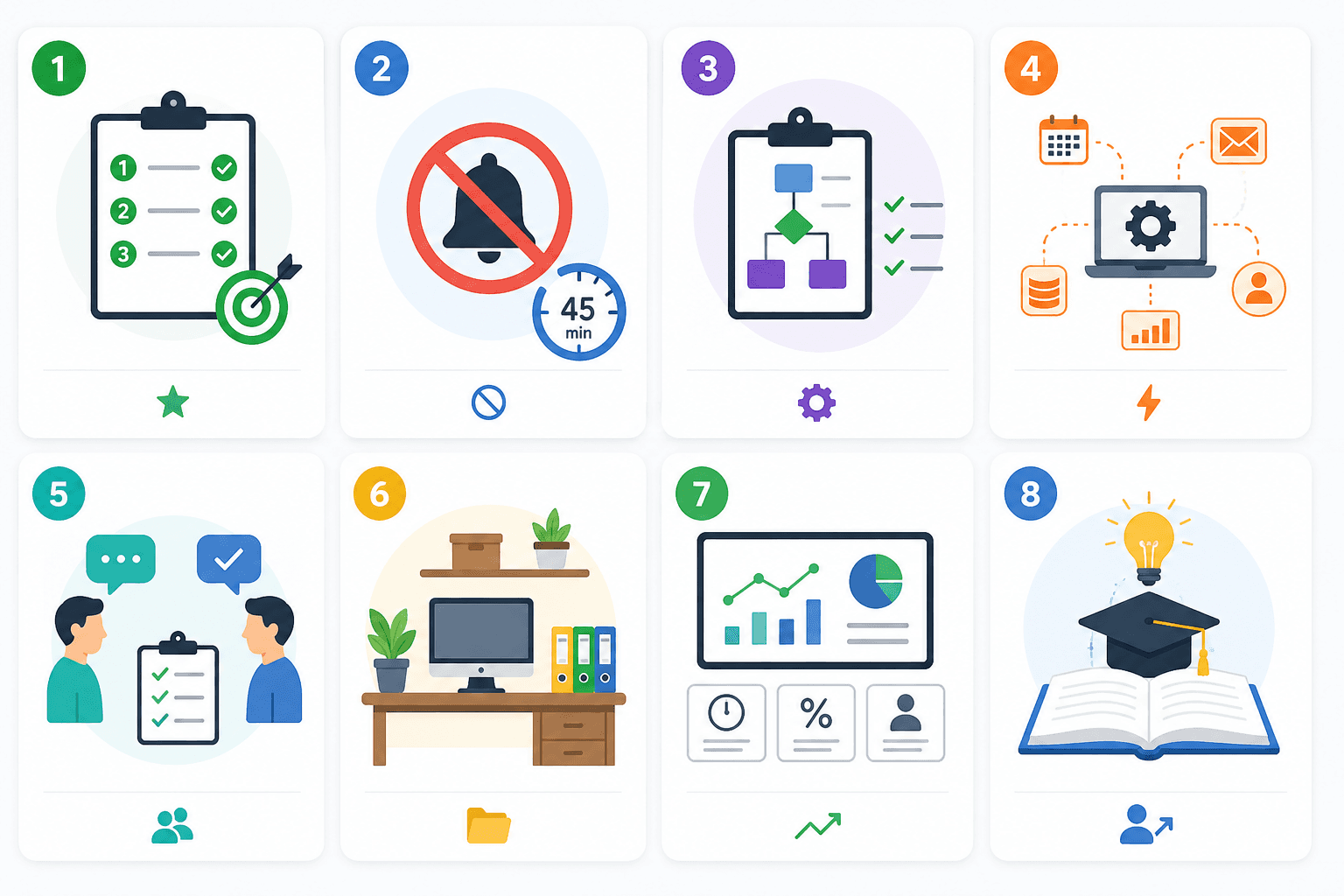
1. Prioritize High-Value Tasks First
Not every task deserves equal attention. One of the fastest ways to increase efficiency is to focus on the work that creates the biggest results.
Start each day by choosing your top three priorities.
Example:
Instead of spending your first hour checking emails, use that hour to complete a proposal, sales task, or client deliverable.
This creates immediate improved efficiency because your best energy is used on your most important work.
2. Reduce Distractions
Distractions destroy momentum. Constant notifications, random conversations, and switching tabs can cost hours each day.
Create focused work blocks where distractions are removed.
Example:
Turn off notifications for 45 minutes while completing deep work, then check messages afterward.
Reducing interruptions helps build a more efficient workplace.
3. Use Clear Systems and Processes
If tasks are reinvented every time, productivity drops. Great organizations rely on repeatable systems.
Create standard operating procedures for common tasks.
Example:
Use a checklist for onboarding new employees, approving expenses, or launching projects.
This creates consistency and an overall increase in efficiency across teams.
4. Automate Repetitive Tasks
Technology can handle many low-value tasks faster than humans.
Look for repetitive work such as:
Scheduling meetings
Sending reminders
Data entry
Reporting
Customer follow-ups
Example:
Use scheduling software instead of multiple back-and-forth emails.
Automation leads to increased efficiency and frees employees for higher-value work.
5. Improve Communication
Poor communication creates delays, confusion, duplicated work, and mistakes.
Use direct communication, assign clear ownership, and define deadlines.
Example:
Instead of saying “Can someone do this?”, say “John will finish this by Friday at 3 PM.”
This improves efficiency in the workplace because everyone knows expectations.
6. Keep an Organized Workspace
A messy environment wastes time and drains focus.
Keep your desk, files, apps, and digital folders organized.
Example:
Use simple folder structures, clear file names, and clean workspaces so items are easy to find.
An organized environment supports an efficient workplace.
7. Measure Performance
What gets measured gets improved.
Track metrics such as:
Project completion time
Response time
Error rates
Sales activity
Customer satisfaction
Output per employee
Example:
If customer support replies average 24 hours, build a system to reduce that to 4 hours.
Tracking creates continuous improved efficiency.
8. Invest in Training
Sometimes inefficiency is not laziness. It is a lack of skill.
Well-trained employees complete tasks faster, make fewer mistakes, and solve problems independently.
Example:
Teaching keyboard shortcuts, Excel formulas, project management tools, or customer handling skills can save hours weekly.
Training drives long-term increasing efficiency throughout the business.
Bonus Efficiency Ideas
If you want more efficiency ideas, start here:
Use meeting agendas
Shorten meetings
Delegate more often
Use templates
Batch similar tasks together
Limit unnecessary approvals
Improve documentation
Review priorities daily
Common Reasons Work Efficiency Drops
Many teams struggle because of:
Too many meetings
Poor leadership communication
Constant interruptions
Manual processes
Unclear priorities
Lack of accountability
Old software
Multitasking overload
Fixing these problems can create rapid increase efficiencies across the company.
Frequently Asked Questions
How do you increase efficiency at work fast?
Focus on priorities, reduce distractions, automate repetitive tasks, and improve communication.
What improves work efficiency the most?
Usually clear priorities, better systems, and fewer interruptions create the fastest gains.
Why is efficiency important in the workplace?
Efficiency saves time, lowers costs, improves employee morale, and increases business performance.
What are easy workplace efficiency ideas?
Use templates, shorten meetings, organize files, and batch similar tasks together.
Final Thoughts
The best way to increase efficiency at work is not to work longer hours. It is to work smarter through better systems, stronger habits, and clearer priorities.
Start with one strategy today. Then build momentum week by week.
Over time, small improvements create massive results, stronger teams, and a truly efficient workplace.
Ready to improve efficiency across your organization? Discover how AskBobAI helps teams find trusted answers faster, reduce wasted time, and streamline workflows with AI-powered search and automation.
photocredit::JLco - Julia Amaral